
STOXX | Blog post | 29 May 2026
SPI contribution: STOXX’s coverage follows SP Intelligence Europe 2026, where Tom Shuttlewood, Head of Strategy & Digital Indices, Product Development at STOXX, presented on downside protection and QIS. The article includes SPI data on the European structured products market by country.
Summary
Following SP Intelligence Europe 2026 on 21 May, STOXX sat down with Tom Shuttlewood to expand on his presentation. He describes how indexing has moved from broad market beta through smart beta and risk premia to customised quantitative investment strategies, many of them designed to limit losses. He groups downside protection approaches into three categories: dynamic risk mitigation, dynamic diversification and pre-defined protection.

Tom Shuttlewood, STOXX, speaking at SP Intelligence Europe 2026.
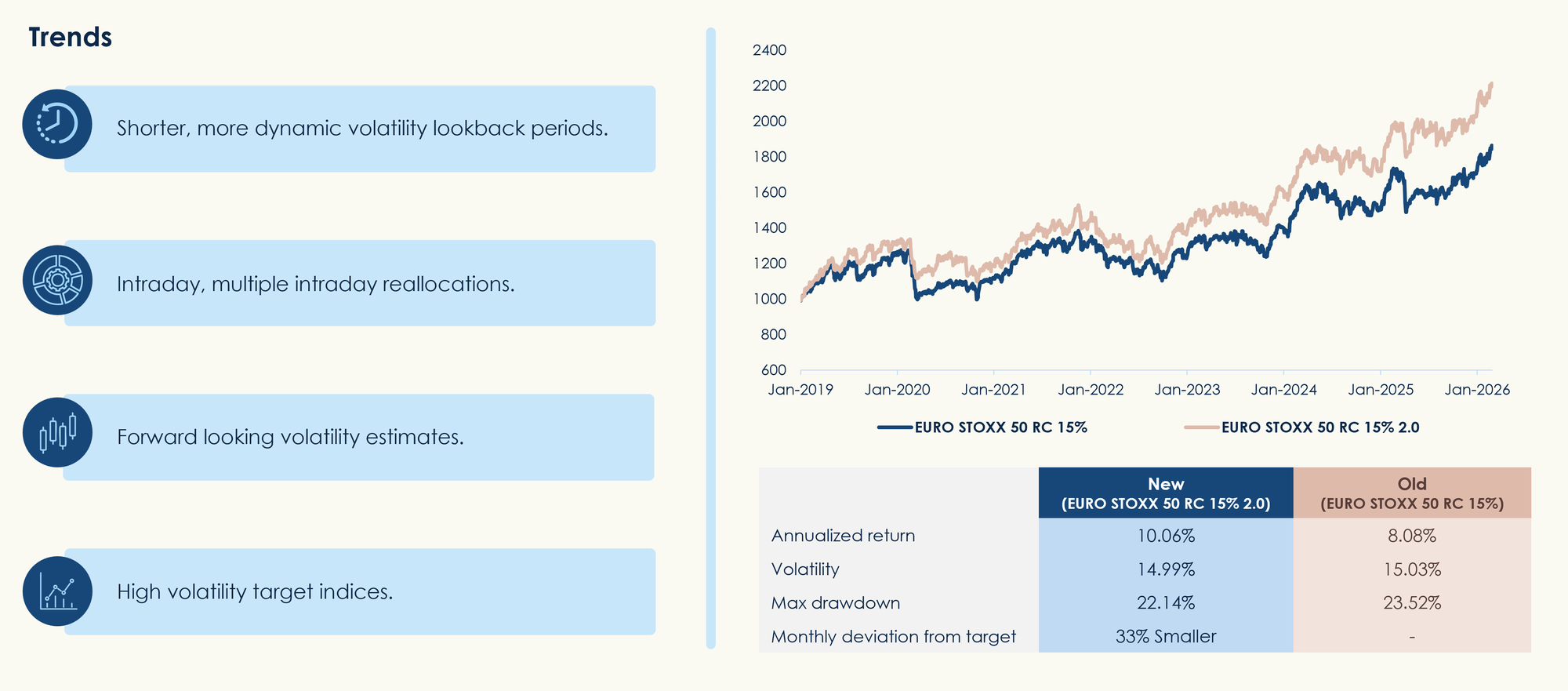
In dynamic risk mitigation, volatility target indices have become more responsive through shorter lookback periods, intraday reallocation and forward-looking volatility inputs from short-dated options. Some now target volatility of 30% to 40%, which lets issuers offer higher coupons.
Figure 1: Volatility target indices
 Source: STOXX.
Dynamic diversification covers multi-asset and equity-volatility strategies, such as the EURO STOXX 50 Volatility Balanced index, which performed strongly in the early months of the COVID-19 sell-off. Rotation strategies increasingly use AI-driven signals.
Figure 2: EURO STOXX 50 Volatility Balanced index performance
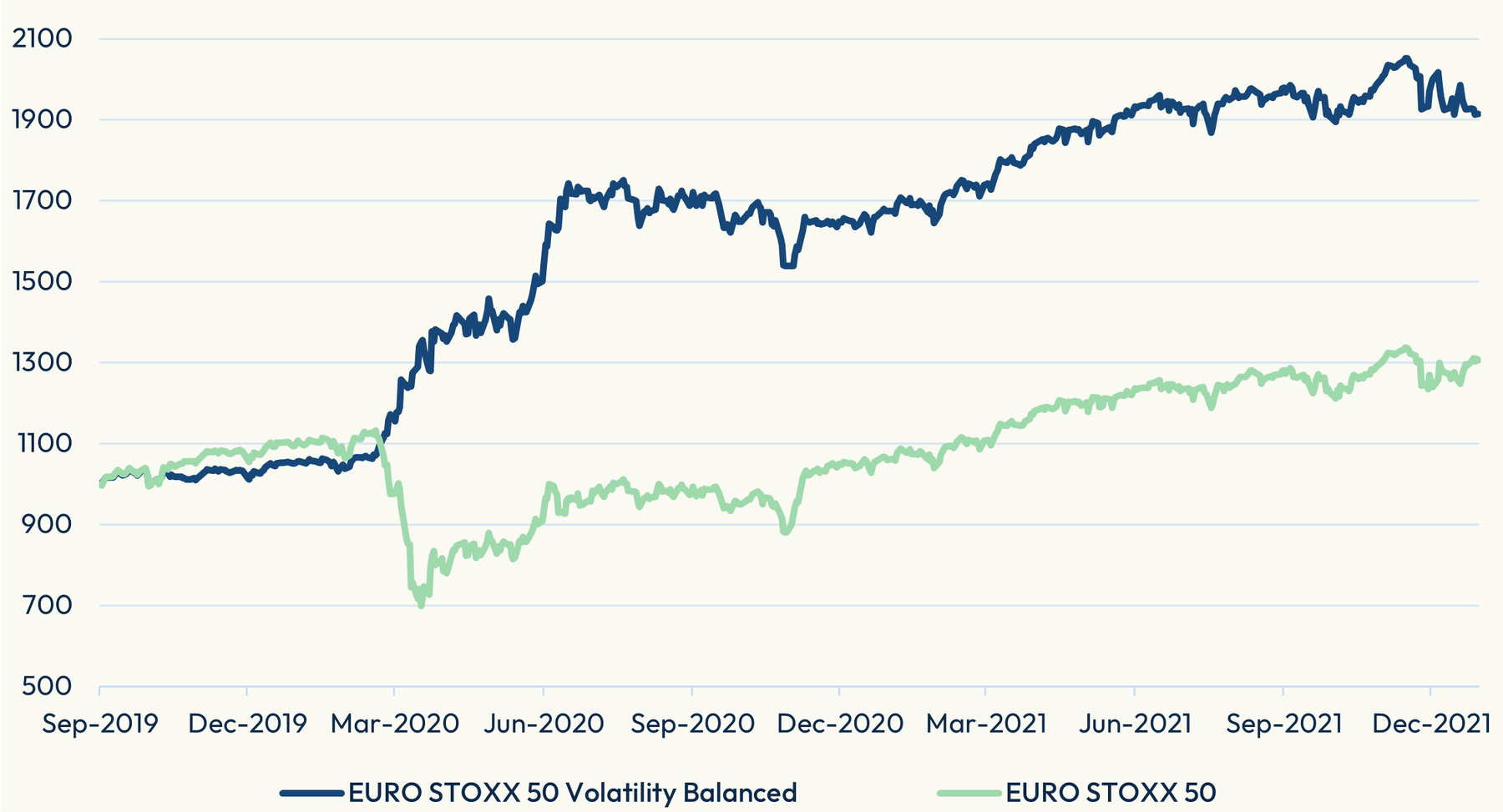
Source: STOXX. Indices rebased to 1,000 as of 2 September 2019.
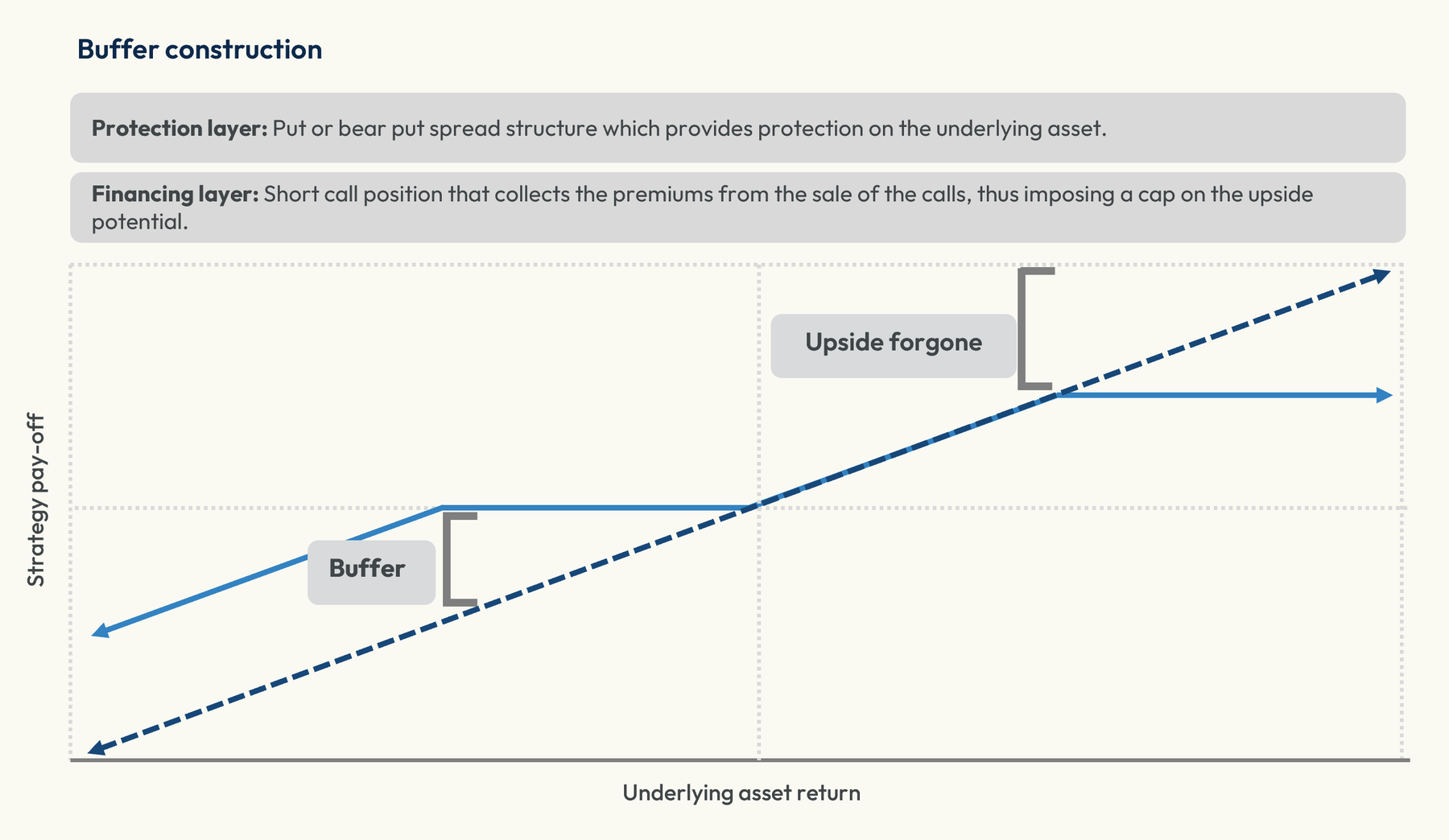
Pre-defined protection centres on buffer indices, built much like a put spread collar with buffers typically between 5% and 20%. Demand is now shifting towards more tailored designs.
 Source: STOXX.
Shuttlewood stresses the two-way link with structured products. Volatility target indices are common underlyings, while defined outcome strategies borrow directly from structured product payoffs, with autocallable-based indices gaining early traction. Drawing on SPI data, he shows how much product use differs across Europe: around 70% of Swedish issuance is uncapped growth and participation, more than 70% of products in Spain and Belgium carry capital protection, and yield enhancement dominates in Switzerland and Italy.
Figure 4: European structured products market by country
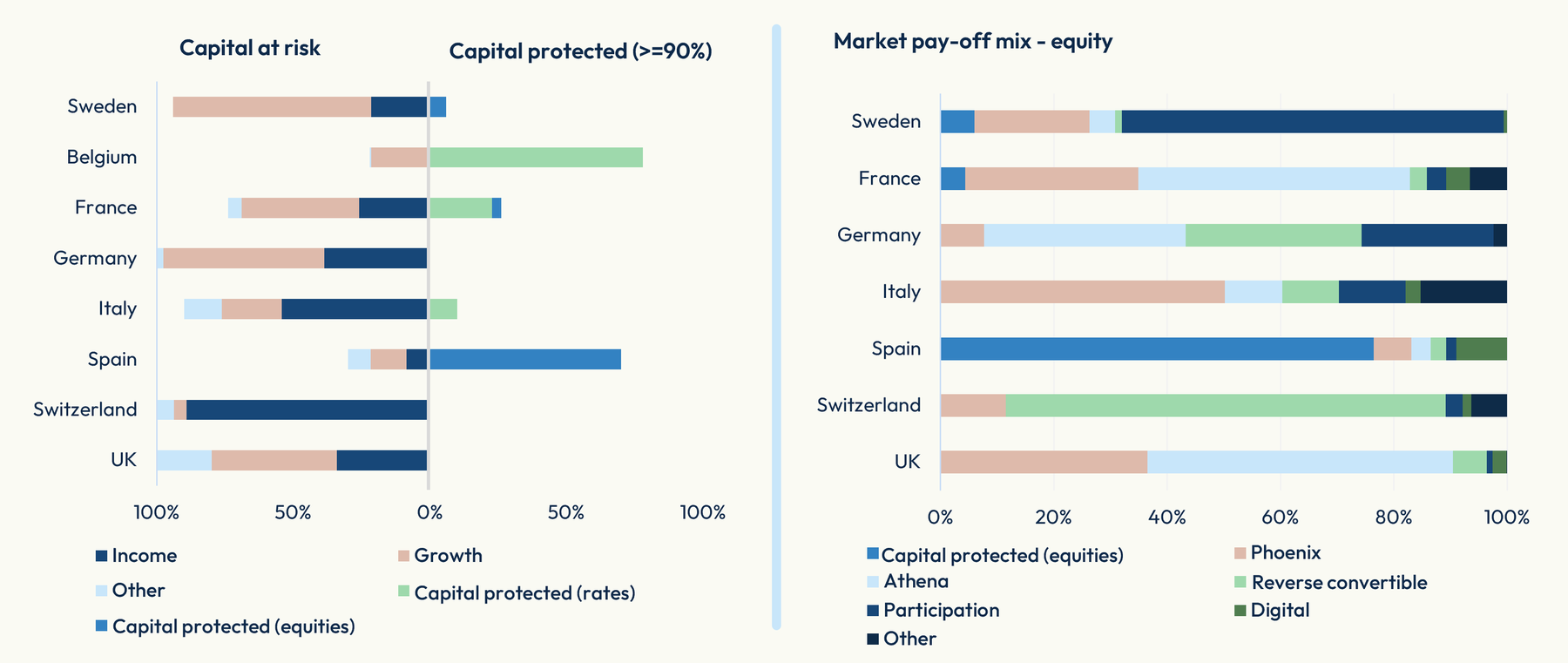 Source: SP Intelligence, part of WSD.
Looking ahead, he highlights three trends: AI adoption across strategy research and validation, standardisation as structured product ETFs and exchange-listed QIS reach mainstream brokerage accounts, and greater customisation for investors focused on retirement and long-term protected investing.
Key quote
Tom Shuttlewood: “What we see in the structured product market often acts as a precursor” to developments in the ETF market.
Read the full article
Protecting the downside: how indices and structured products are meeting investor demand (STOXX)
Original article © 2026 STOXX Ltd. All rights reserved.