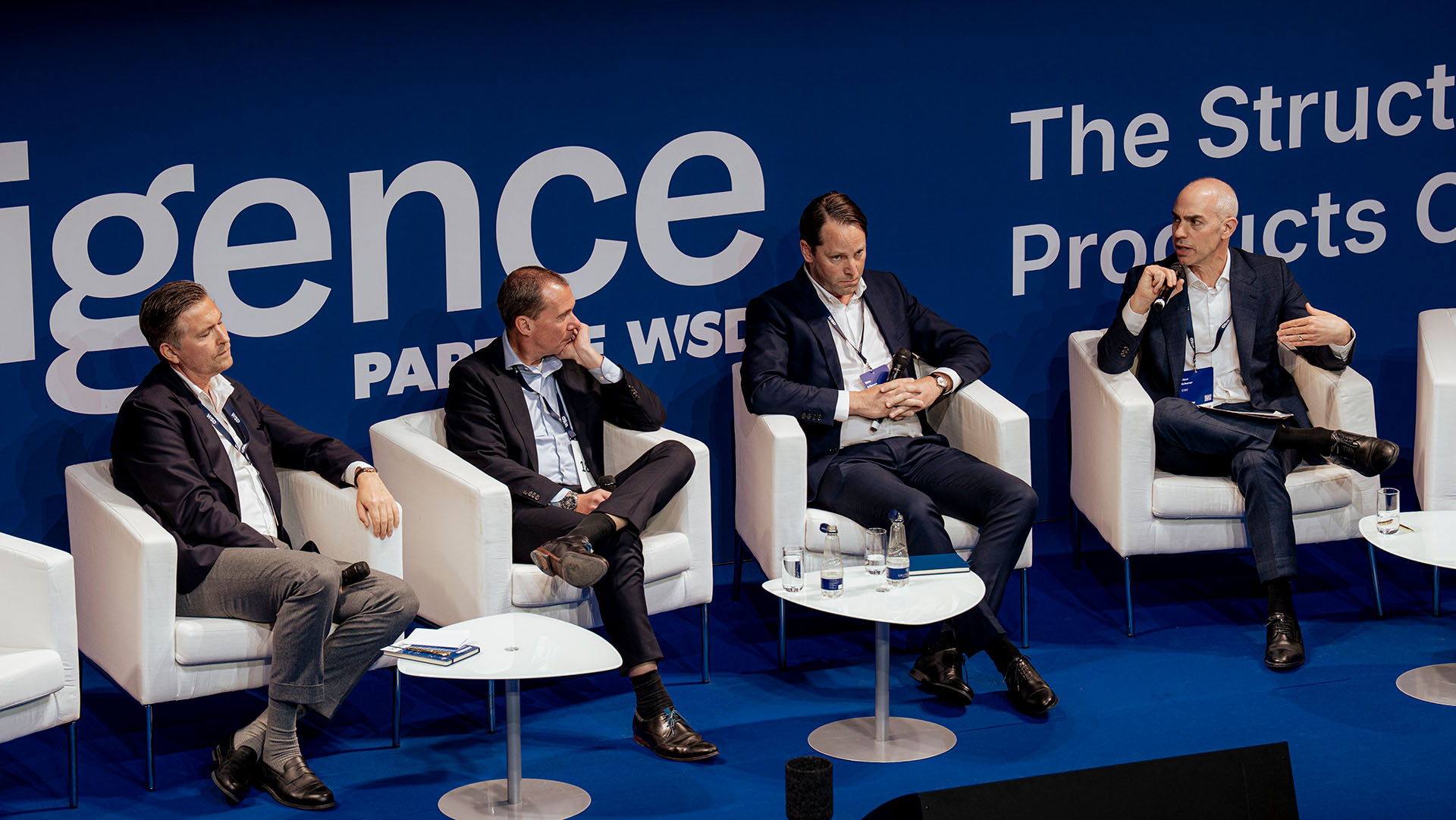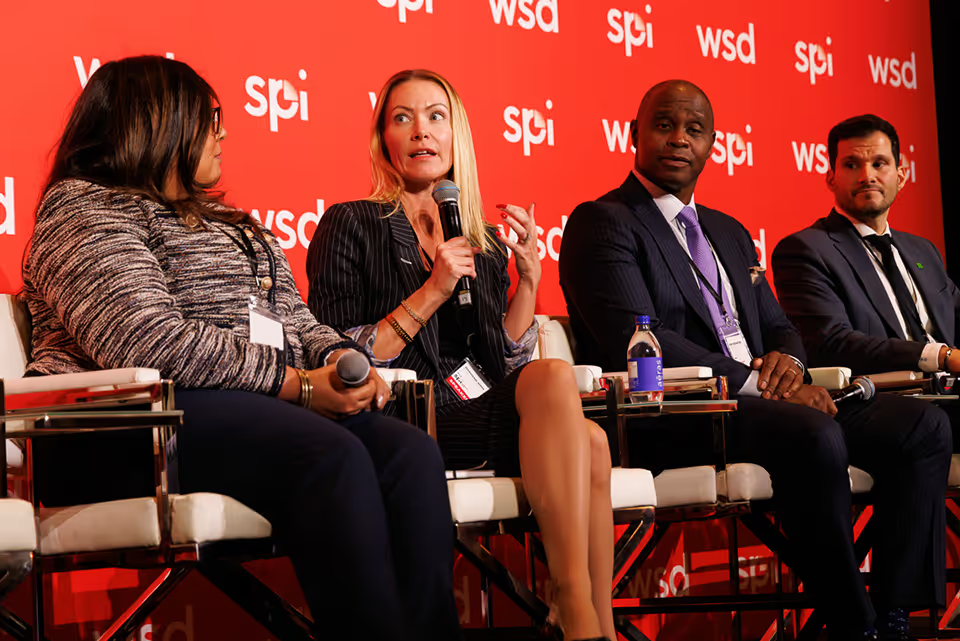
The Bank of Nova Scotia has been named Best Issuer at the SPi Canada Awards 2026, recognized for a weighted scorecard that balances sales performance, product diversity, and outcomes.
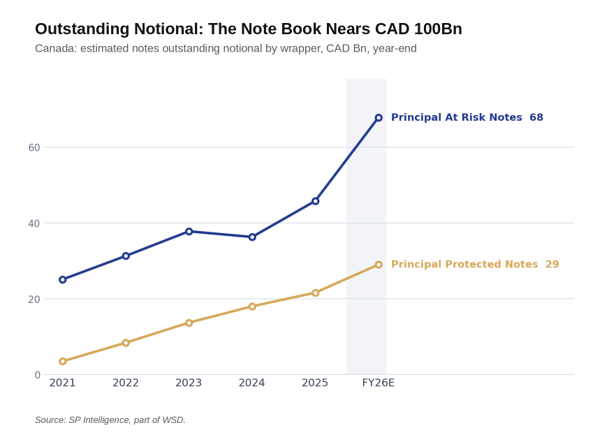
The award comes in a year of unusual expansion. Estimated note outstanding notional is projected to reach CAD 96.8Bn at the end of 2026, up 43.6% from CAD 67.4Bn a year earlier, with Principal at Risk Notes rising to CAD 67.8Bn as issuance of CAD 61.3Bn outpaced redemptions of CAD 34.5Bn. Winning on a balanced scorecard in a book growing at that rate means holding position across market share, shelf breadth and outcomes simultaneously, rather than gaining on one at the expense of another.
The result wasn't driven by strength in a single area. Scotiabank scored strongly across all three dimensions: market share, innovation, and product performance, and it's that balance across the full scorecard that carried the win.
It's a reminder of what the Best Issuer category is actually designed to measure: not who moves the most volume, and not who has the broadest shelf, but who does both while producing outcomes clients are still happy with. We asked James McGuigan, MBA, CFA, Managing Director & Head of Canada Investor Solutions at Scotiabank Global Banking and Markets, what sits behind that result.
A strategy years in the making
Asked what the win means internally, McGuigan was clear that it reflects work across the full chain: sales, structuring, trading, technology, operations, legal, and compliance, rather than any one team's contribution.
"What makes this recognition particularly meaningful is that it validates a strategy we've been executing for several years," McGuigan said. "We've worked hard to build a business centred on long-term client relationships, high-quality products, advisor education, and making it easier to do business with us."
There was no single inflection point behind the result, McGuigan added no "Rubicon-crossing moment." Instead, he described the award as the sum of "hundreds of small enhancements that have compounded over time," built on continuous investment in people, process, and product capability.

Distribution: built on repeat relationships, not one-off trades
Scotiabank's distribution reach was a defining factor in the result, and McGuigan attributes it to a deliberate shift away from transactional selling.
"We've been very intentional about building a business around long-term, repeat clients, investing in durable relationships and the kind of trust that compounds with every mandate we earn," he said. "We want clients to view us as a trusted partner, not a product vendor."

Managing Director & Head, Canada Investor Solutions, Scotiabank Global Banking and Markets
That means engaging advisors on the problems they're actually solving, not just the products on the shelf. "Most advisors are focused on broader portfolio construction challenges, not just structured notes," McGuigan said. "We aim to provide holistic solutions that help advisors serve their clients more effectively."
Over the past 12 months, McGuigan says that translated into heavy investment in "automation, workflow enhancements, advisor education, and lifecycle support", alongside a deliberate breakdown of internal silos between sales, structuring, and trading, so advisors deal with a team that can speak to markets and portfolio construction, not just respond to pricing requests.
The advisor conversation itself has shifted as a result, McGuigan says: "The conversation has really moved from 'What's the coupon?' to 'What problem does this solve?'"
Product diversity, with discipline
Scotiabank's strength on product diversity reflects genuine range, but McGuigan was careful to frame it as curated rather than exhaustive.
"We're still mindful of keeping a curated shelf," he said. "We often talk internally about building products that are built to be bought, not built to be sold. We aren't trying to have every single product on the shelf... Every product has to earn its place through a clear purpose, sound investment rationale and a realistic probability of helping clients achieve their goals. If it doesn't, it doesn't belong there."
The area McGuigan points to with the most pride is proprietary index development. Over the past two years, working with Scotiabank's Equity Research team, the bank has launched four families of proprietary indices, including dividend indices built on a multi-factor model designed to screen out companies at risk of cutting payouts, and the Scotiabank Build Canada Index, offering research-driven exposure to companies tied to major Canadian nation-building projects.
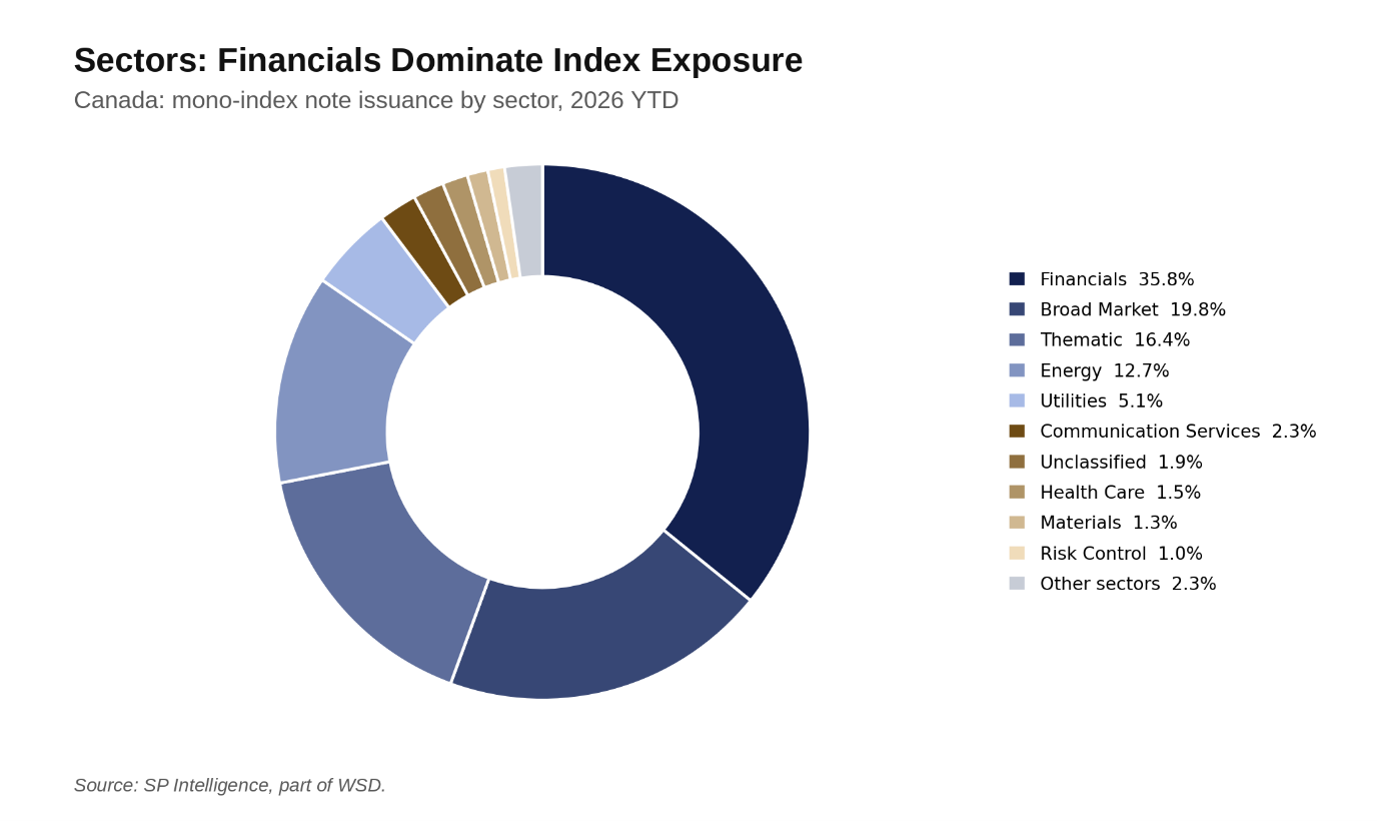
Those constructions sit in a well-populated part of the Canadian market. Financials remain the single largest exposure at 35.8%, reflecting a market built around the six domestic banks, with Energy at 12.7% and Utilities at 5.1% alongside them. But more than a third of mono-index issuance references indices that are not sector bets at all: Broad Market at 19.8% and Thematic at 16.4%.
More than 750 products have been issued on these indices since launch, and McGuigan describes them as "a major point of differentiation when talking to clients."
Asked how it balances genuine innovation against refining what already works, McGuigan pointed to a line from Rocket Companies founder Dan Gilbert: "Innovation gets rewarded, but execution is worshipped." New product only gets built where there's a genuine client need its portfolio notes, for instance, were developed directly in response to advisors flagging the challenge of managing too many line items in a single portfolio.
Reading the market
Scotiabank says 2026 outperformed its own expectations, even though it entered the year constructive on the Canadian structured products market. Its outlook had centred on helping advisors navigate a disconnect between stronger equity markets and a weaker global macro backdrop, leading it to prioritize principal protection, rotation beyond the "Mag-7" names, and targeted sector and single-name exposure.
"Despite periods of uncertainty, advisor engagement remained strong and investors continued looking for ways to stay invested while managing risk," McGuigan said.
The bigger shift, in his view, is structural rather than cyclical: structured notes are moving "from a niche product toward a more established portfolio construction tool," with broader usage across client types and geographies - even accounting for the rollover volumes that have contributed year-over-year growth figures across the market. Advisors, he says, are increasingly treating notes as an ongoing strategic asset allocation decision maintaining exposure across payouts and underlyings, rather than a one-off trade idea.
"The question has moved from why they should use structured solutions to how those solutions fit alongside traditional assets," he said.
What's next
With the platform investment largely in place, McGuigan frames the next 12 months as a shift from building infrastructure to using it. "Different payouts will come in and out of focus, but good service is evergreen," he said. "Less time on process means more time spent listening to clients, which is the whole point of having built it."
Looking further out, McGuigan expects the market's centre of gravity to keep moving from product to service. "As technology makes pricing, execution and lifecycle management increasingly accessible, differentiation becomes less about the product itself and more about the value surrounding it," he said. "Advisors are looking for partners who can provide actual insights and genuinely customized solutions."
There's still room to improve, even in a winning year, McGuigan acknowledges streamlining advisor workflow further, deepening portfolio analytics, and delivering more customization at smaller ticket sizes. "Automation is what makes that possible, and we're not finished with it," he said. "As the industry becomes more commoditized every year, our response has been to invest further in insight, service and outcomes."
Bank of Nova Scotia was named Best Issuer, Canada 2026 at the SPi Canada Awards, presented September 17 in Montreal.