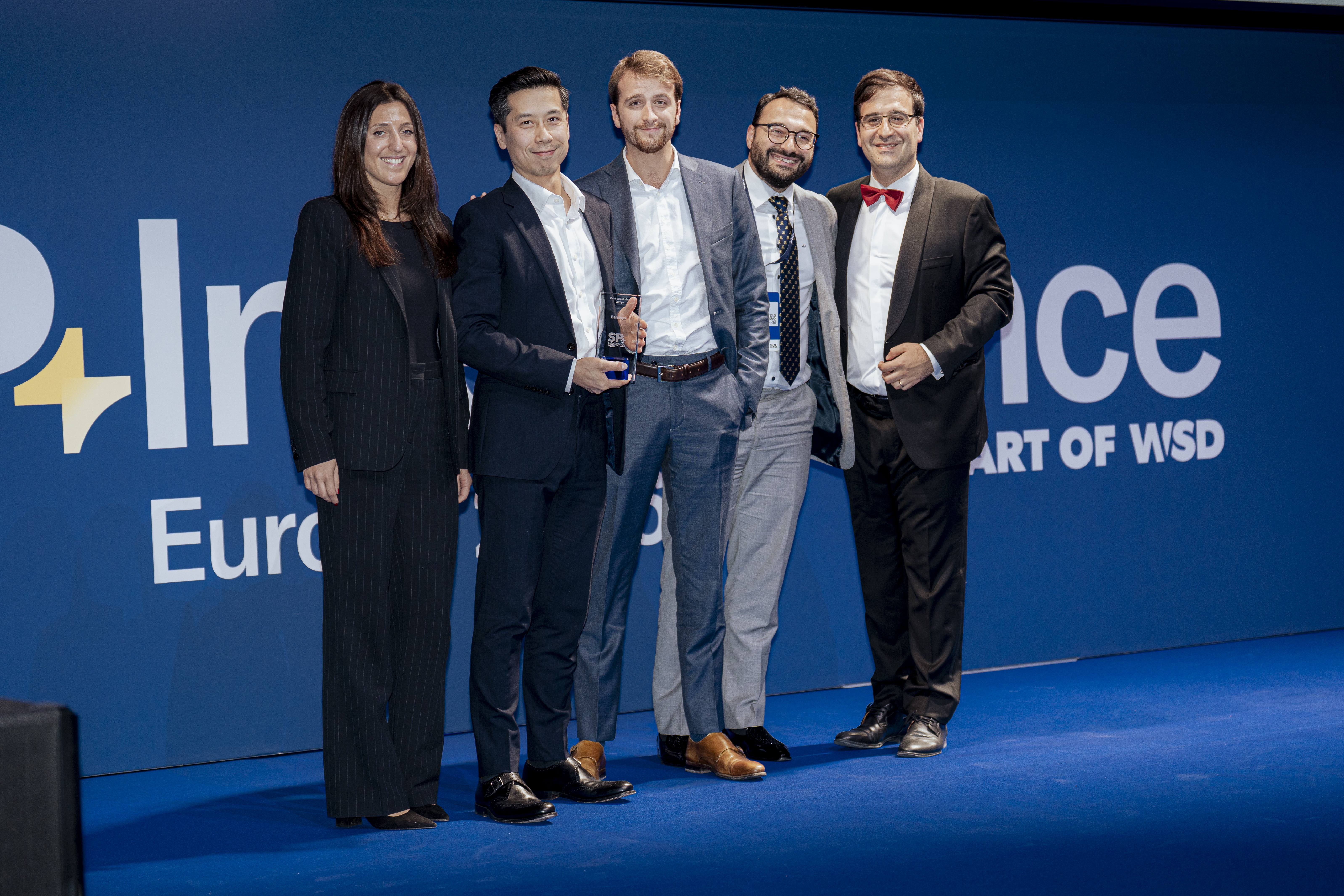
In a category where the margin between first and second place was razor-thin, Barclays emerged as the winner of the SPi Best Structuring award for EMEA in 2026. The result reflects more than a strong year of deal flow. It signals a deliberate and sustained repositioning of the bank's structured products franchise. One that has expanded its reach across asset classes, deepened its technology infrastructure, and evolved its delivery model to meet a client base whose expectations are shifting just as fast as the markets themselves.
From Equity Stronghold to Multi-Asset Platform
Barclays has long been recognised for the quality of its equity structured product platform, and that foundation remains intact. But what distinguished the bank in this year's award cycle was the credibility and pace of its expansion beyond it.
Interest rates and credit have emerged as genuine growth pillars within the EXO franchise, not secondary offerings bolted onto an equity-first business, but asset classes where the bank is seeing sustained client demand and building dedicated structuring capability. This matters in the current environment. With EMEA rates-linked issuance rising sharply, reaching 18.3% of Q1 2026 volume, up from 15.4% a year earlier banks that can offer integrated cross-asset solutions are capturing flows that more narrowly focused competitors cannot.
The direction of travel is clear: clients are no longer looking for asset class specialists. They want a structuring partner that can navigate the full spectrum of market conditions and construct solutions that genuinely reflect their investment objectives.
Technology as a Structural Advantage
At the core of Barclays' structuring capability is COMET, the bank's proprietary platform for automating the implementation of structured payoffs within a standardised framework. Rather than treating each transaction as a bespoke build, COMET allows the bank to deploy a widening range of product features efficiently and repeatably, shortening the path from concept to execution and reducing operational drag across regions.
The effect is twofold. Internally, it improves governance, pricing consistency and risk controls. Externally, it translates into faster delivery and greater transparency for clients, qualities that increasingly matter as product complexity grows and client scrutiny intensifies.
William Luk, Director, Exotics & Hybrids Structuring, EMEA, articulates where this is heading: "The market is moving from bespoke, ticket by ticket structuring towards more repeatable payoff frameworks. The ability to industrialise design while preserving flexibility will be key to capturing wallet share."
He adds that the next phase of innovation will be increasingly AI-driven, encompassing product design, pricing, lifecycle optimisation and client delivery, enabling more efficient manufacture, better balance sheet usage, and solutions tailored at scale.

Khalid Aboulfouioud - Director, Equity Derivatives Structuring
Responding to a More Demanding Client
The structured product market in 2025 and into 2026 has been defined by two coexisting client impulses: the desire for protection and the fear of missing out. Volatility driven by geopolitical events and rapid sentiment shifts has made investors cautious, but not passive.
Barclays' response has been to design payoffs that hold both objectives simultaneously participation and protection, structured around specific investment views and risk profiles rather than generic templates. Through its QIS capabilities, which sit alongside EXO, the bank can also offer clients access to systematic strategies and factor exposures, broadening the palette of return drivers available within a single relationship.
The result is a franchise that can engage clients across the full risk spectrum, from those seeking capital preservation to those looking to monetise volatility through worst-of barrier structures.
Global Scale, Local Execution
One of the consistent themes running through Barclays' award submission is the integration of its global platform. EXO operates as a single, connected franchise and not a collection of regional businesses running parallel strategies.
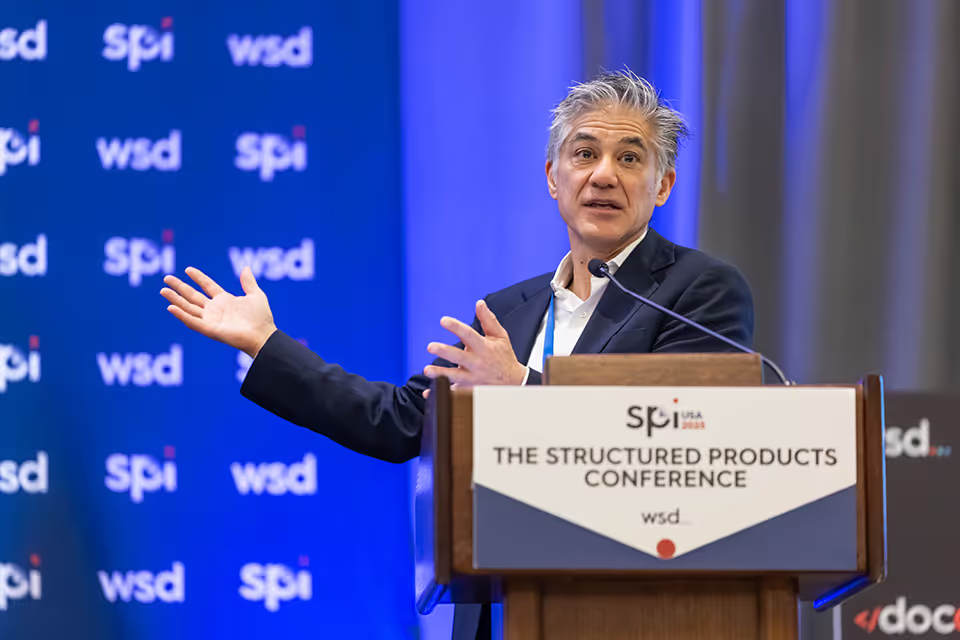
This matters for delivery. Structuring expertise developed in EMEA can be deployed in the US or APAC without rebuilding from scratch, and insights from fast-growing markets feed back into product development globally. Khalid Aboulfouioud, Director and Head of Exotics & Hybrids Structuring, Americas, points to the US market as a case in point, where demand has grown significantly and structured products are now distributed across traditional notes, insurance-based solutions, and mutual funds and ETFs, each wrapper opening a distinct distribution channel and a broader investor base.
"Technological innovation and scalable platform architecture have become critical differentiators," he notes, referencing the computational pressure that rising US and APAC pricing volumes are placing on platforms across the industry. Barclays' investment in scalable infrastructure positions it to absorb that pressure rather than be constrained by it.
What the Award Reflects
Winning the SPi Best Structuring award in a competitive field is a statement about where Barclays has been investing in platform, in people, and in the breadth of its offering. The margin over second place may have been narrow, but the strategic distance between Barclays' current trajectory and a more static model of structured products delivery is widening.
The bank has built something that is harder to replicate than a single product or a single year of performance: a globally integrated, technology-enabled structuring franchise with the flexibility to meet clients wherever the market takes them.