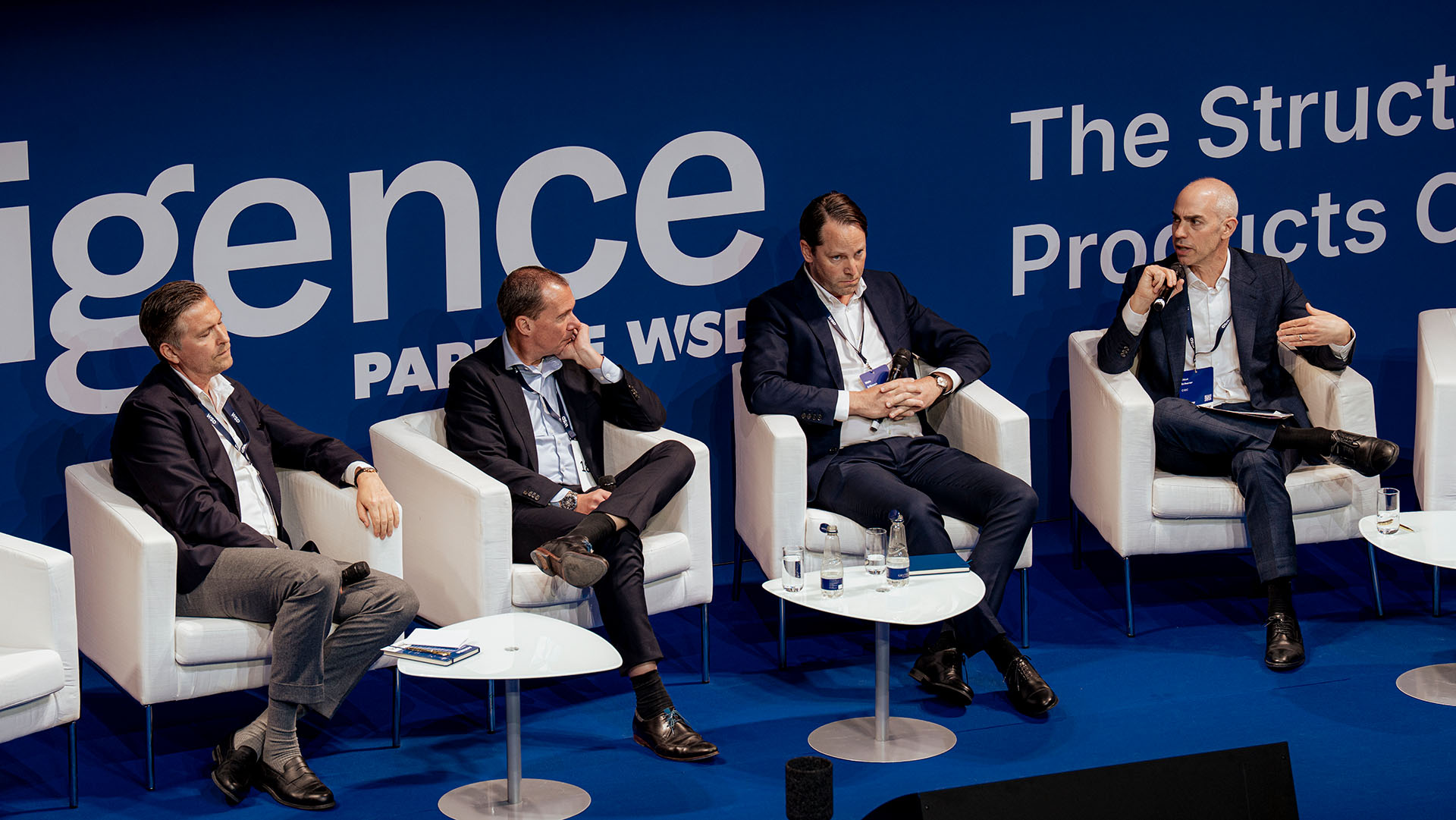

In a year marked by strong issuance volumes and intensified competition across Europe’s structured products market, Bank of America’s recognition as Issuer Rising Star at the SPi European Awards reflects more than just growth. It highlights a strategy built on scalability, institutional strengths, and disciplined execution.
What stands out in Bank of America’s trajectory is that its expansion into structured products has not been driven by a sudden strategic pivot, but rather by a gradual extension of existing capabilities. As Joseph Khouri, Head of EMEA Equity Structuring, puts it, “this wasn’t a strategic shift so much as a natural evolution for us.”
From Institutional Strength to Scalable Platform
Bank of America’s historical positioning in OTC derivatives, particularly within institutional markets has played a central role in shaping its structured products business. Its capabilities in pricing, risk management, and balance sheet deployment provided a natural foundation to expand into structured notes.
Rather than building a standalone franchise, the bank leveraged these strengths to establish structured products as a scalable, client-driven activity. As Khouri notes, “the missing piece for us to become top three globally was the structured note business.”

Source: SP intelligence, part of WSD
This trajectory is reflected in issuance volumes. Bank of America’s structured products activity in EMEA has seen a significant increase, with estimated volumes rising from approximately €3.8bn in 2024 to over €7bn in 2025—representing close to a doubling year-on-year. This acceleration highlights the effectiveness of its scalable platform and the rapid adoption by European distributors.

A Disciplined Approach to Growth
A defining feature of Bank of America’s expansion has been its emphasis on consistency over speed. In contrast to more opportunistic strategies seen elsewhere in the market, the bank has prioritised a measured and structured build-up of its platform and client base.
“We’re not there to try and grow very fast and quickly… it’s a steady approach,” Maxime Menard, co-Global Head of Third-Party Distribution Sales explains.
This discipline is closely linked to one of its structural advantages: balance sheet capacity and funding stability. These factors have enabled the bank to remain active and competitive across core, high-demand product segments, including more standardised products.
As Khouri adds, “we are competitive on very vanilla underlyings… where some issuers have retrenched.” The result is a value proposition centred not only on pricing, but also on reliability and continuity of supply.
Reframing Innovation: From Complexity to Relevance
As the platform has scaled, the focus has increasingly shifted from execution to product development—though not towards greater complexity.
“It’s not about adding complexity anymore,” says Bernard Rogier, Head of EMEA Equity Structuring Distribution.
Instead, innovation is framed around addressing specific client needs, particularly in a changing macro environment. “We don’t innovate to innovate—we innovate to solve specific client needs,” he adds.
A clear example of this approach is the development of CHF-based compositional underlyings, designed to optimise cost of carry in a higher interest rate environment. By embedding FX dynamics at the underlying level, these solutions provide additional flexibility in structuring outcomes.
As Rogier explains, “[you can] use the value either to enhance yield, enhance protection, or do both.”
Technology and Platform Design as Enablers
A key differentiator in Bank of America’s build-out has been its ability to develop infrastructure without legacy constraints.
“We can build the platform with no legacy constraints,” one senior team member noted during the discussion.
This has resulted in a globally integrated platform where pricing, risk management, and execution capabilities are centralised, while still allowing for regional customisation, an important feature in Europe’s fragmented market landscape.
Equally critical is the alignment between product content and execution. Ideas are only brought to market once pricing, risk, and operational processes are fully in place, ensuring consistency and reliability in delivery.
Europe as a Strategic Growth Driver
Europe represents more than geographic expansion; it is a core component of Bank of America’s broader structured products strategy. The region’s diversity across markets, client types, and product demand provides both scale and diversification benefits.
“Europe brings natural diversification… which is a key strategic pillar,” Khouri notes.
At the same time, Europe serves as a hub for product development, given the wider range of underlyings, payoff structures, and investor preferences compared to more standardised markets.
Building Credibility in a Crowded Market
Entering the European structured products market comes with inherent challenges, particularly given the number of established issuers already active across the region.
“Getting the 16th issuer on the list… is a leap of faith [for distributor],” Maxime acknowledges.
Bank of America’s ability to gain traction has been supported by its track record in the US, which has provided a tangible reference point for distributors evaluating new counterparties. This transfer of credibility has been instrumental in accelerating client adoption across Europe.
Momentum and Forward Trajectory
The bank’s growth trajectory is already evident in its recent performance, with volumes continuing to scale rapidly.
“We’ve already done half of last year’s volume in three months,” says Maxime Menard.
Looking ahead, the ambition is clear: to replicate its US success across regions and establish a leading global position. “The ambition is to become top three globally,” Maxime adds.
Conclusion
Bank of America’s recognition as Rising Issuer Star reflects a combination of factors that extend beyond short-term performance. Its approach, grounded in institutional capabilities, supported by modern infrastructure, and executed with discipline, has enabled it to scale effectively in a complex and competitive market.
As the platform continues to expand across Europe and beyond, its current positioning appears less like a peak and more like an early stage in a broader global build-out.