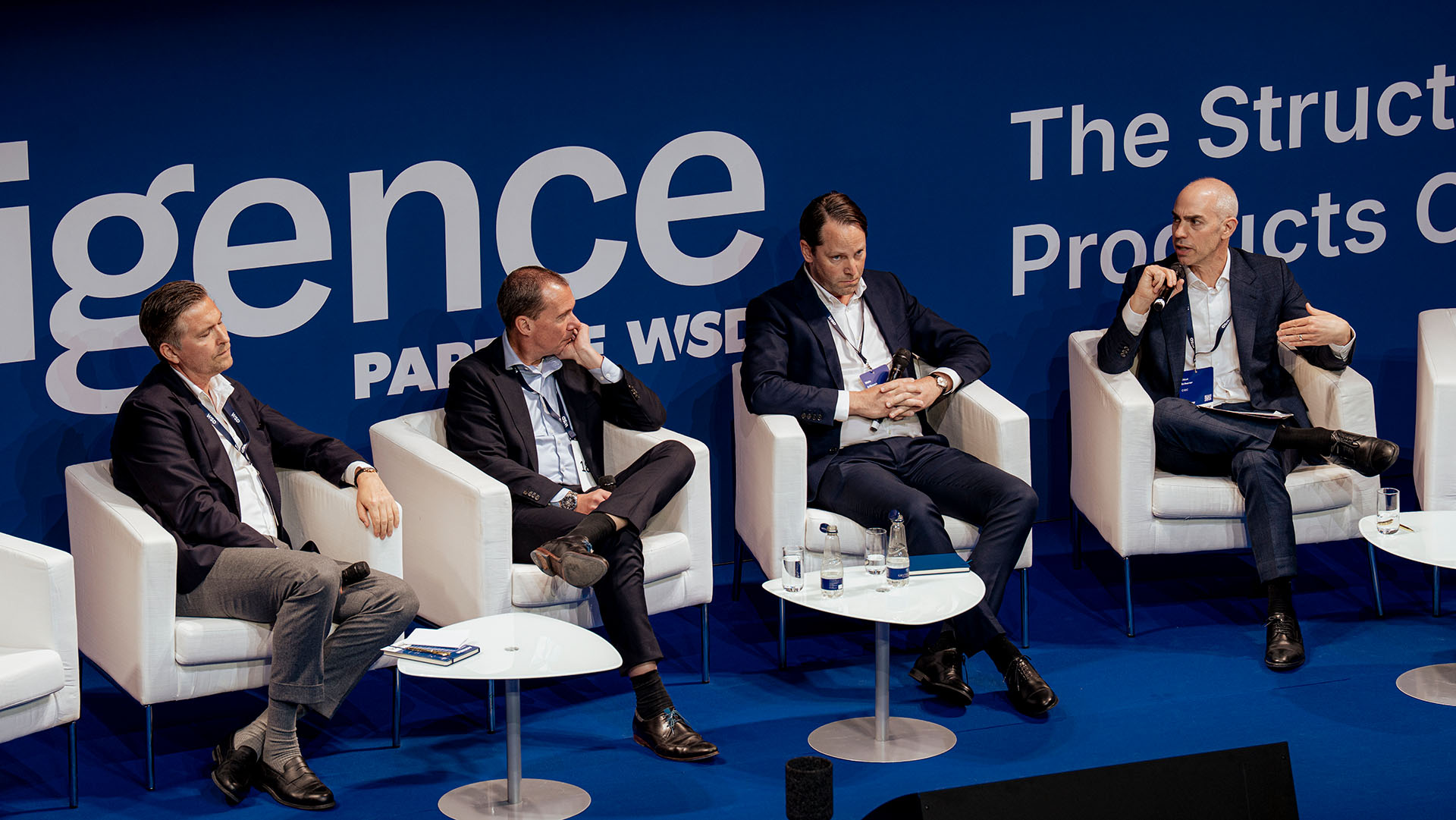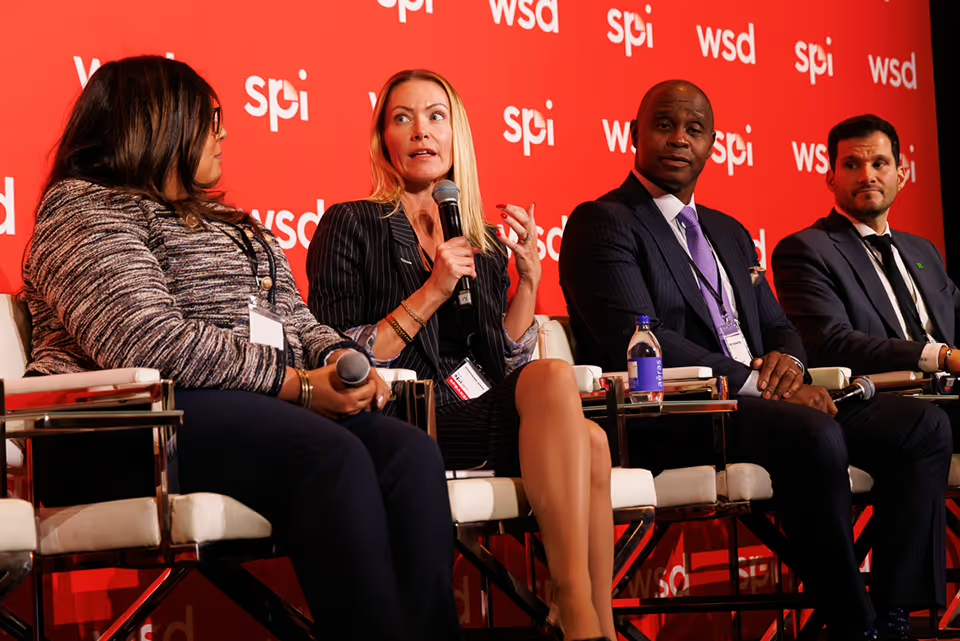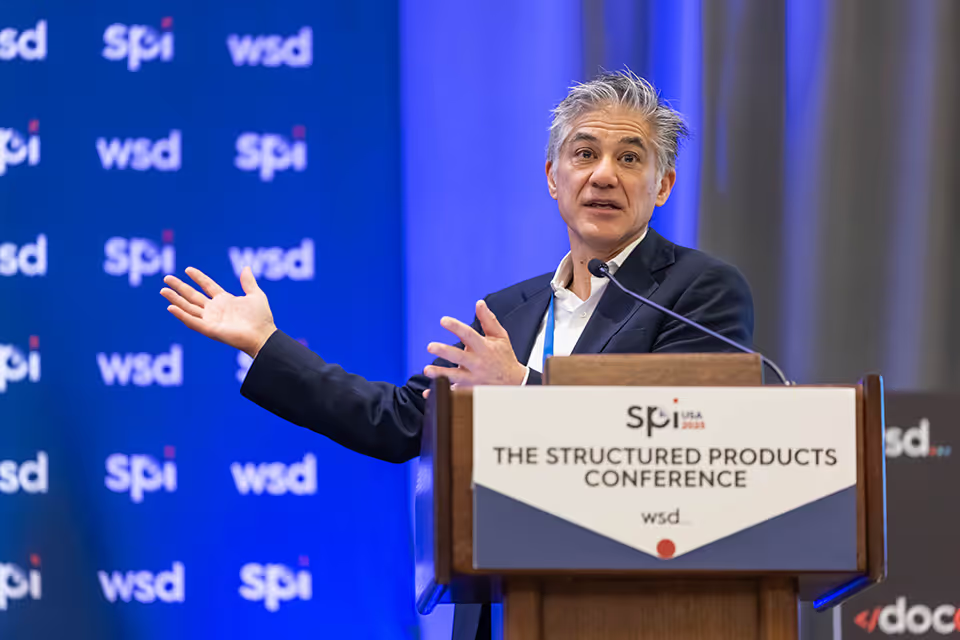
Anyone who knows me knows I struggle to restrain myself, especially when I’m in front of 200 people. I just can’t resist injecting a bit of fun into the room. A few individuals (and a couple of banks) found themselves in my line of fire, but I truly hope everyone took it in the right spirit.
I’ll also admit my golf swing will never win awards but watching a crowd of industry folks enthusiastically whacking balls and laughing together was a highlight. It’s that one day each year when we manage to be competitive without forgetting to be friendly.
From a content standpoint, we opened with SPi US data, real distributor feedback included. And the message was clear: the market is shifting. Product performance has been extraordinary, particularly for participation structures, but pricing new deals has become more challenging. Beyond the continued push for catapult-style products, the industry is searching for new ideas, especially in the realm of alternatives like private equity and even crypto.
The SPi presentation introduced an interesting theory: structured products are coming of age in the U.S. If the market finishes the year around $220 billion and edges toward $300 billion in the near future, then why is AUM growth slowing? A mature industry, perhaps.
Our next panel explored how to “ride the curve” in the current environment. They largely agreed with the data and kept a positive tone but the real spotlight was on QIS. This panel was also the first to bring up the Calamos autocallable ETF. While the innovation was welcomed, private bank representatives emphasized that these products must adopt the same level of risk disclosure expected of structured notes, not rely only on glossy marketing.
Then came the “view from the top” - firms representing over 50% of year-to-date issuance. Once again, the sentiment was overwhelmingly upbeat. Growth has been strong and, as one speaker put it, things should keep expanding as long as we’re in a “happy, happy market.” What stood out here was the renewed focus on ETFs. Industry leaders made an important point: we shouldn’t see ourselves solely as a structured note industry but as a derivatives or payoff industry. The more asset classes adopt our payoff structures, the more education, assets, and credibility the entire ecosystem gains.
We also wanted to bring value to manufacturers, so we curated a panel featuring top RIA firms from across the country, alongside CAIS and Morgan Stanley. As expected, all reported rapid growth in their structured note usage, some from zero to $2 billion, others sitting at 15% of AUM in structured products. But one question lingered: as manufacturers increasingly service independents directly, what becomes of the warehouses? If no one else will say it, here’s my take: products may be ubiquitous, but clients choose advisors for service, not inventory.
Our final panel of the day turned to annuities and index design. When asked whether risk-control indices have “failed,” the panel suggested that overreliance on back testing - not the indices themselves - was the real issue. And in a moment of bold confidence, they predicted with “200% certainty” that a crypto-linked annuity is on the horizon. Like it or not, crypto is becoming mainstream within structured solutions.
After a live demo of TP ICAP’s secondary market ATS and some thoughtful insights from Tom Haines on using derivatives to support U.S. retirees, we closed with our awards ceremony. With only 20 awards, we kept it meaningful. Calamos took home Deal of the Year for its autocallable ETF, JP Morgan earned Best Issuer, and the Rising Star awards went to Jefferies and Raymond James for their remarkable AUM growth and platform improvements.
But the biggest winner of the night was BNP Paribas. Some may have been surprised, but anyone who has followed the bank’s transformation over the past two years knew the recognition was well deserved, marked by stronger pricing, improved service, and growing influence across both annuities and structured notes.